SMOKE RISE NY
03Scaling a $50M streetwear ecosystem across B2B and DTC
Smoke Rise is a New York streetwear brand that sells direct-to-consumer and wholesales to national retailers and hundreds of independent shops. I originally joined as Digital Product Designer to redesign our underperforming DTC Shopify site. After restructuring the consumer funnel, my scope expanded to oversee the B2B side, partnering with product leadership to drive the 0-to-1 digital transformation of our wholesale engine and establishing the unified brand system that powered both.
Designing for two different buyers
When I joined in 2023, product design was unstaffed. Digital product decisions, brand identity, and performance creative were handled across departments. I was brought in to establish design leadership and unite the experience across both customer channels.
The core challenge was designing for two fundamentally different user behaviors from a shared catalog:
- The DTC consumer: a streetwear customer buys one item in a few minutes on a phone.
- The wholesale buyer: arrives with a purchase order in mind, commits seasonal budget across an assortment, and needs pricing, availability, and line-sheet legibility before anything else.
The Consumer Side (DTC)
Rebuilt an underperforming Shopify site with focus on navigation, PDP, and cart on a mobile-first hierarchy.
Results: ~20% conversion lift, 4.6× ROAS sustained, and a 51.6% email open rate.
The Wholesale Side (B2B)
Co-led the 0-to-1 digital transformation of the buyer flow, off analog and onto role-gated portals.
Results: +11% wholesale AOV at $50M scale, 60% faster line-sheet creation, eliminating PO errors / manual ERP entry.
Reworking the underperforming Shopify funnel
I initially joined Smoke Rise to fix the DTC experience. Traffic was strong, but the site wasn't converting as you would expect.
Analytics highlighted drop-offs in three specific areas: browsing the catalog, evaluating a product, and converting in the cart. Because mobile accounted for the vast majority of traffic, mobile UX dictated every architectural decision.
Re-establishing Browse Hierarchy
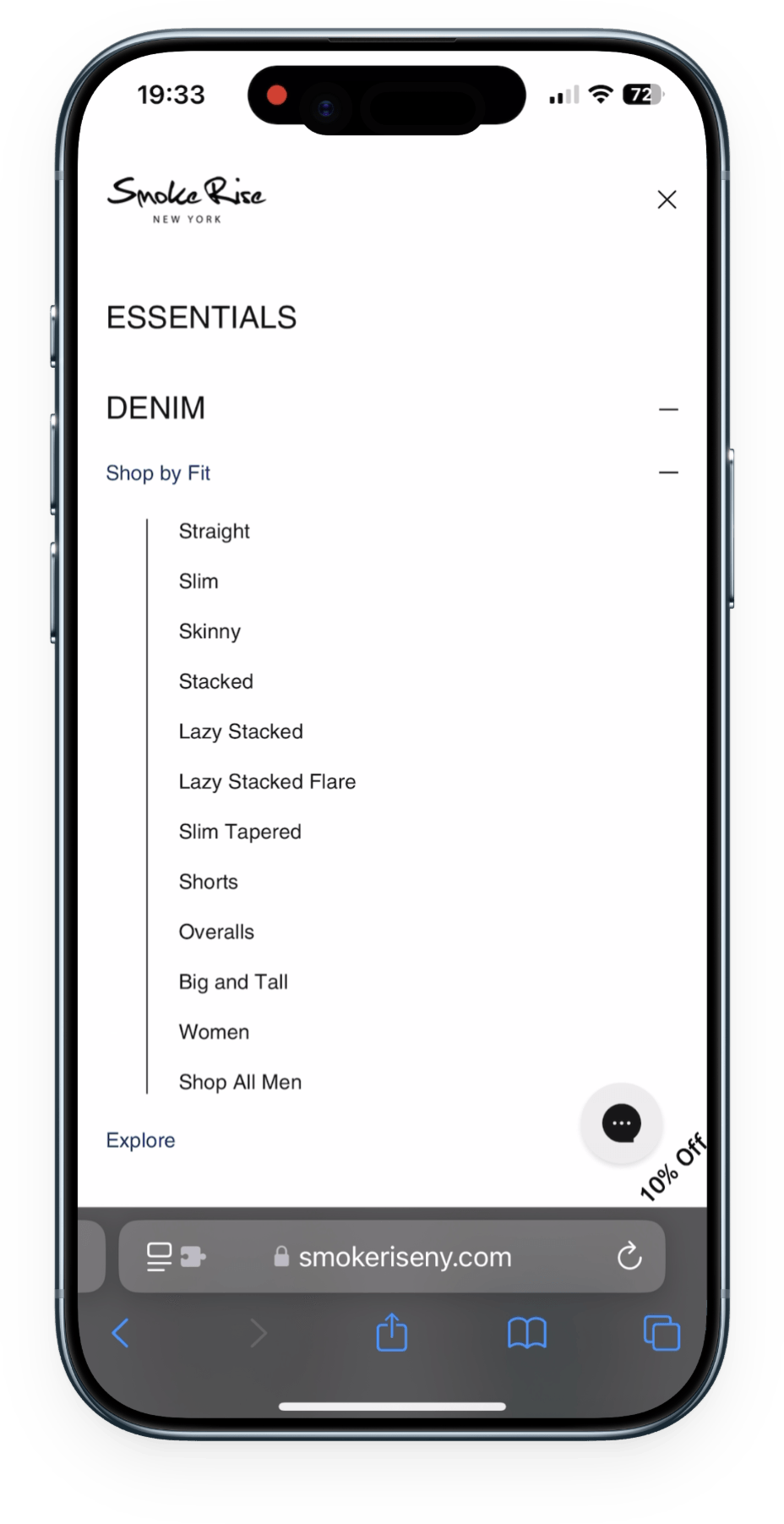
Categories, collections, and promotions sat side by side with no visual order. Support fielded regular calls from customers who couldn't find core denim fits, while analytics confirmed severe drop-offs on home and catalog pages.
I restructured the menu around strict, scannable parent categories with a drop-down UI aligned with the customer mental model.
- Cross-functional alignment: merchandising initially pushed to keep active promotional campaigns mixed into top-level navigation. Using search query logs and drop-off data, I brought merchandising and marketing together around a shared solution: stripping the main menu down to core categories while moving active promotional campaigns into high-impact, dynamic collection headers.
Create a ‘Quick Add to Cart’ button
Integrated direct “Quick Add to Cart” triggers onto catalog item cards, allowing intent-driven repeat shoppers to buy without passing through the PDP.
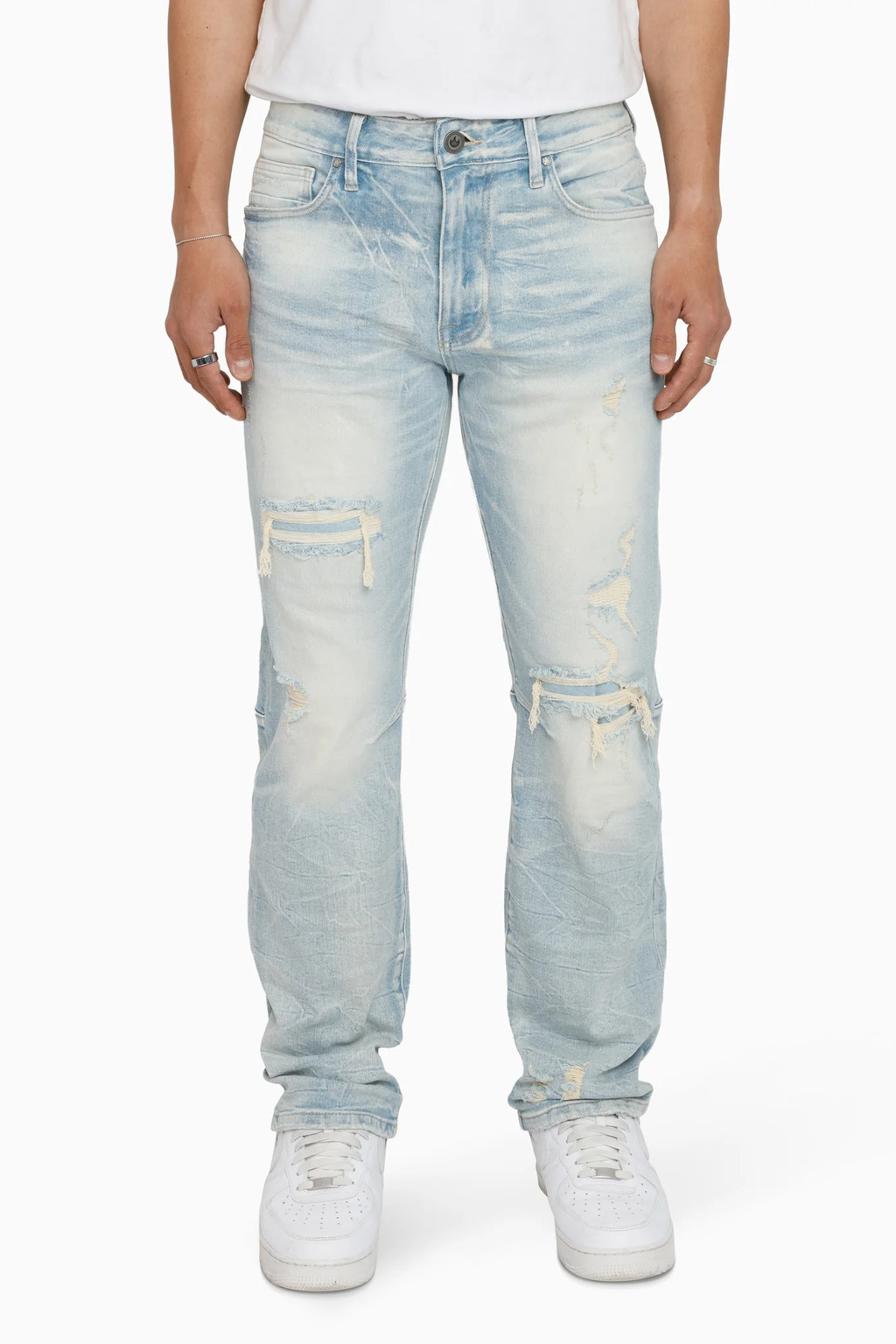
Heavy Whisker Effect Jeans
$85.00
Introduce filters
Filters were almost non-existent due to incomplete Shopify tag structures. I audited our product taxonomy and partnered with our developer to restructure backend metadata, enabling a sticky top-bar filtering system tailored specifically to denim shopping patterns (Fit, Wash, Style) on mobile.
Answering buy decisions directly on the product page
The legacy PDP carried imagery and little else: no descriptions, return policies, accurate fit information, or structured search metadata. Sizing inquiries flooded support, while the existing fit guide was a pop-over modal that clipped imagery on mobile screens.
- Solution: structured product schema in Shopify, and replaced the intrusive modal with an embedded inline fit guide positioned directly beneath size selection.
- Outcome: reduced size-related support tickets, boosted add-to-cart rates, and increased average order value.
Treating the cart as an active purchase facilitator
The existing cart was a static full-page receipt redirect with a checkout button, offering zero promotional clarity or incentive to complete the order.
- Solution: partnered with engineering to build a slide-out drawer cart to preserve shopping momentum without interrupting the user's browse flow.
- Incentives and recommendations: integrated a dynamic free-shipping progress bar (“Spend $X more for Free Shipping”) alongside contextual one-tap cross-sells, positioned close enough to add in a tap but far enough from the primary checkout CTA to eliminate friction.
Expanding scope to the $50M engine
Wholesale represented roughly 90% of Smoke Rise's revenue. Despite this scale, the business was running on paper pads at trade shows, static PDF line sheets, phone orders, and manual ERP data entry.
In close partnership with the Product Manager, I co-led the company's 0-to-1 digital transformation, transitioning our wholesale engine off manual, error-prone workflows, introducing a modern B2B digital platform (NuORDER), and designing a custom retailer portal.
Spearheading Digital Transformation through Research
Moving a $50M wholesale model from paper to digital faced initial pushback from internal sales teams. To build alignment and uncover friction without traditional session recordings (restricted by NuORDER), I led a research and change management initiative:
- Data-backed pilot: co-designed a controlled pilot using re-order benchmarks. Proving faster turnarounds, zero overselling, and major time savings secured sales buy-in to swap paper pads for iPad catalogs.
- Buyer & rep interviews: interviewed four independent shop buyers and account managers to map trade-show habits, line-sheet usage, and replenishment flows.
Architecting the dynamic role-gated buyer experience
Building individual static line sheets for hundreds of buyers was operationally impossible, so I architected a single Master Page system powered by conditionally visible widgets and buyer tag logic:
- Strict content gating: assigned tags based on purchase history, frequency, category focus, and geolocation. A Men's-only denim buyer logged into a custom landing section where Women's and Big & Tall categories were completely hidden, presenting only relevant inventory.
- Interactive digital binders: replaced paper trade show binders with interactive digital lookbooks. Sales reps on iPads (and buyers on desktops) could tap directly on visual styles, select sizes from a live matrix, and build draft POs instantly.
- Real-time ERP and ATS sync: structured the ordering matrix alongside our development team to display real-time Available-to-Sell stock tiers (Immediate, Pre-Book, Low Stock warnings), eliminating overselling and manual stock-check calls.
- Proprietary retailer portal: stripped away DTC marketing copy in favor of operational density: high-speed grid layouts, multi-attribute filtering (Fit, Wash, Style), instant asset downloads, and protected paths for preferred tier-pricing.
The buyer flow, from login to the assortment their assigned tags unlock.
Real-time ERP and ATS sync, so buyers order against accurate stock.
Building infrastructure before deliverables
Smoke Rise had an established logo and recurring visual habits, but a lack of formal design infrastructure meant every email, campaign, and paid ad re-argued basic visual decisions, making performance attribution difficult.
I built a systematic foundation from the inside out: tone and voice first, then color and typography, then visual language, then packaging. The deliverable was a full set of guidelines to work across high-volume email, fast-turn paid creative, organic social, and physical product.
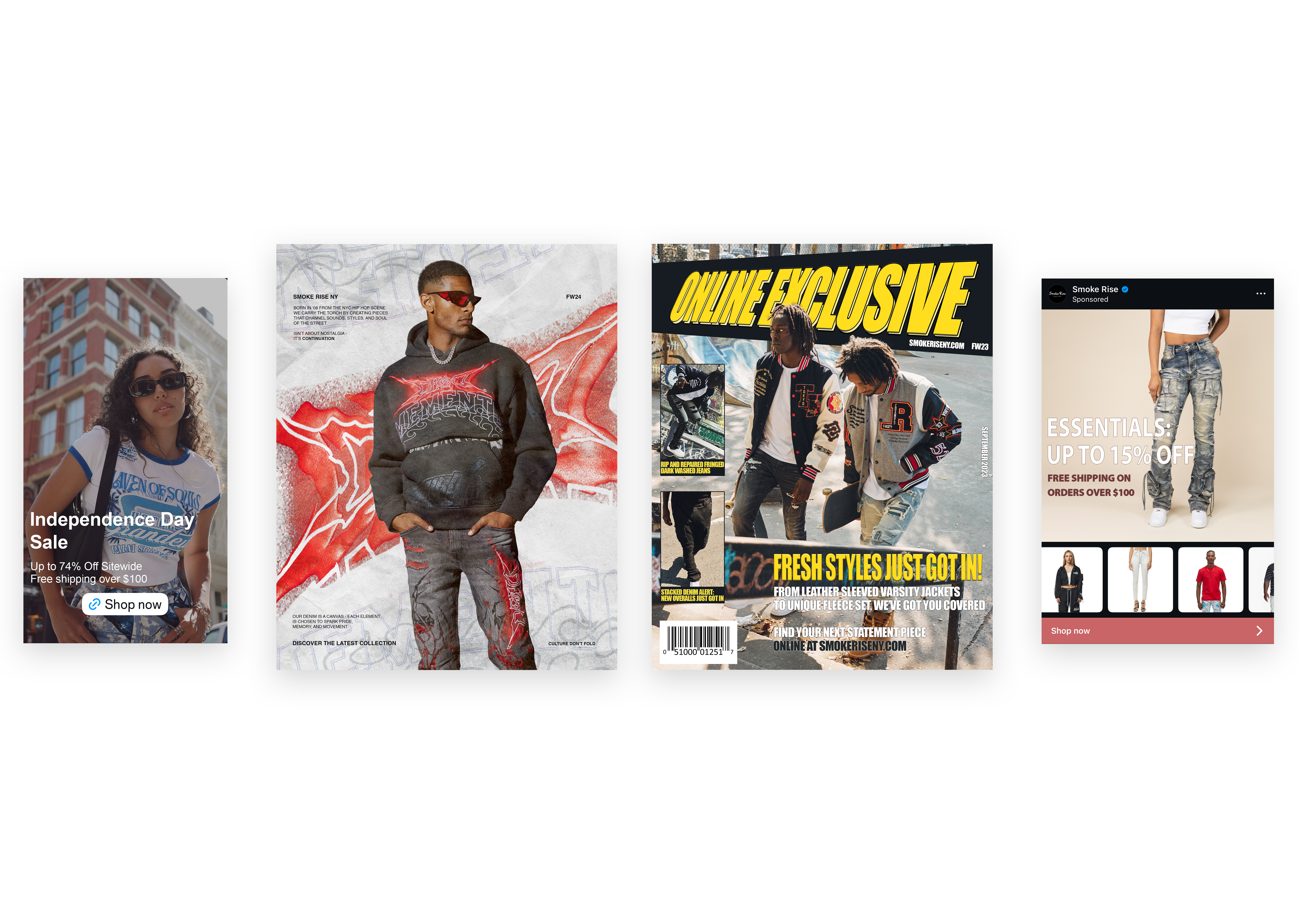
Meta ads and graphics for email, social, and commercial usage, created under the brand guidelines.
Smoke Rise launched collections several times a year. Every cycle started with the B2B line sheet, setting an operational cadence that cascaded down to all consumer touchpoints.
Because B2B trade show deadlines set the pace, I built reusable design components instead of bespoke layouts and treated the brand system as infrastructure. Accessibility (contrast, semantic structure, alt text) was embedded into the component level so it could never be skipped during seasonal rushes.
The Results
Over two and a half years, design was held directly accountable to business outcomes and operational metrics.
~20% DTC conversion lift
4.6× sustained ROAS
51.6% email open rate
+11% wholesale AOV lift
60% faster line-sheet creation
Trade show and PO errors eliminated
Designing against business outcomes, not brief outcomes. At Smoke Rise, design was held to the same numbers the business was: conversion, ROAS, AOV, open rate, sell-through. I treat those numbers as the brief.
Building systems before deliverables. From a design perspective, a system makes velocity and consistency possible: components, tokens, and decisions across platforms. From a marketing perspective, a customer meets a brand across social, email, packaging, and the site, and all of it has to feel like one brand. The system serves both.